
2016 — 2026
A principal told us her students weren't lazy.
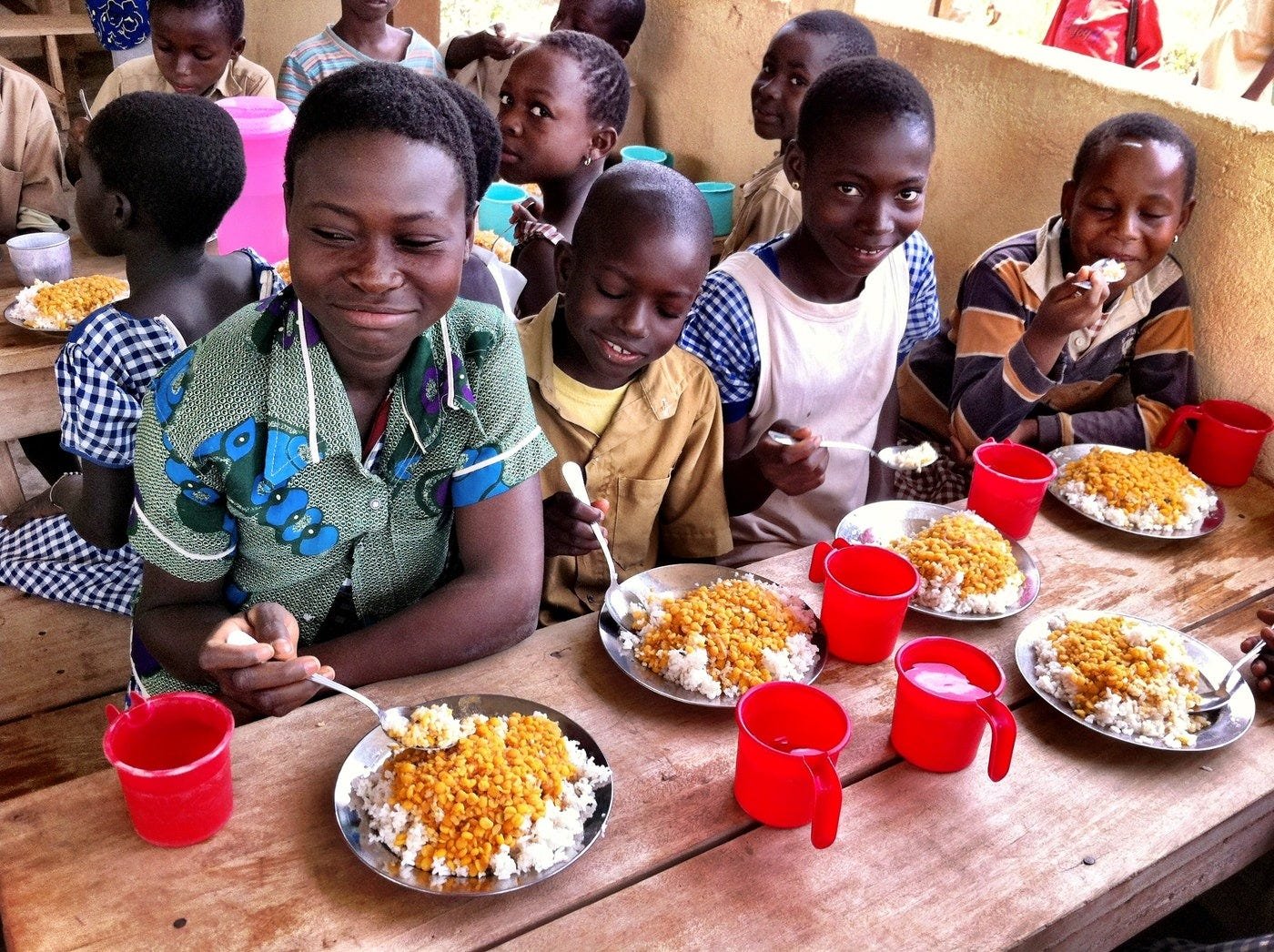
In 2016 a school principal in Tamale explained to one of our founders why her afternoon classes were a write-off. It wasn't discipline and it wasn't the teaching. Her students hadn't eaten since the night before, and by one o'clock there was nothing left in them.
She had costed out a lunch program herself. It came to about twenty cents a plate. Nobody had funded it, because it wasn't interesting.
We covered it for a term, then for a year, then people back in the States started asking how to chip in, and it became a nonprofit. We've stayed on that one thing ever since. We don't drill wells, we don't run schools, and we don't send volunteers. We buy food and we count the plates.
What we hold to
Four rules we wrote down early and haven't broken.

We only do food
Every year someone suggests we branch into wells, or laptops, or teacher training. All good things. None of them ours. An organization that does one thing can be held to account for it.
Food is bought where it's eaten
Grain comes from smallholders in the same district wherever supply allows — 76% of it last year. Shipping American corn across an ocean would cost more and undercut the farmers next to the school.

Kids are people, not marketing
No photographs without informed consent from the child and a guardian, no last names, no swollen bellies used to move product, and consent can be withdrawn at any time.

The books open before anyone asks
Audited statements and a grant-by-grant breakdown are published every year, including the failures. We'd rather you heard about a bad quarter from us.
Milestones
What happened when
| Year | Milestone | Meals served |
|---|---|---|
| 2016 | First lunch pot funded at one school in Tamale, Ghana | 7,600 |
| 2018 | Incorporated in Missouri as a nonprofit; first partner in Uganda | 248,000 |
| 2020 | Take-home rations launched when schools closed | 960,000 |
| 2022 | Malnutrition treatment begins in Kitui County, Kenya | 2,100,000 |
| 2024 | Malawi and Tanzania partners join; first independent audit published | 3,700,000 |
| 2026 | Eleven partners, sixty-one school kitchens, five countries | 4,900,000 |
Ten years in, a plate of food is still the cheapest thing that works.
$10 is forty meals. $100 feeds two kids for a full school year.