
schools with a working garden
of food bought in-district
cost per plate where a garden runs
to plant and fence a new plot
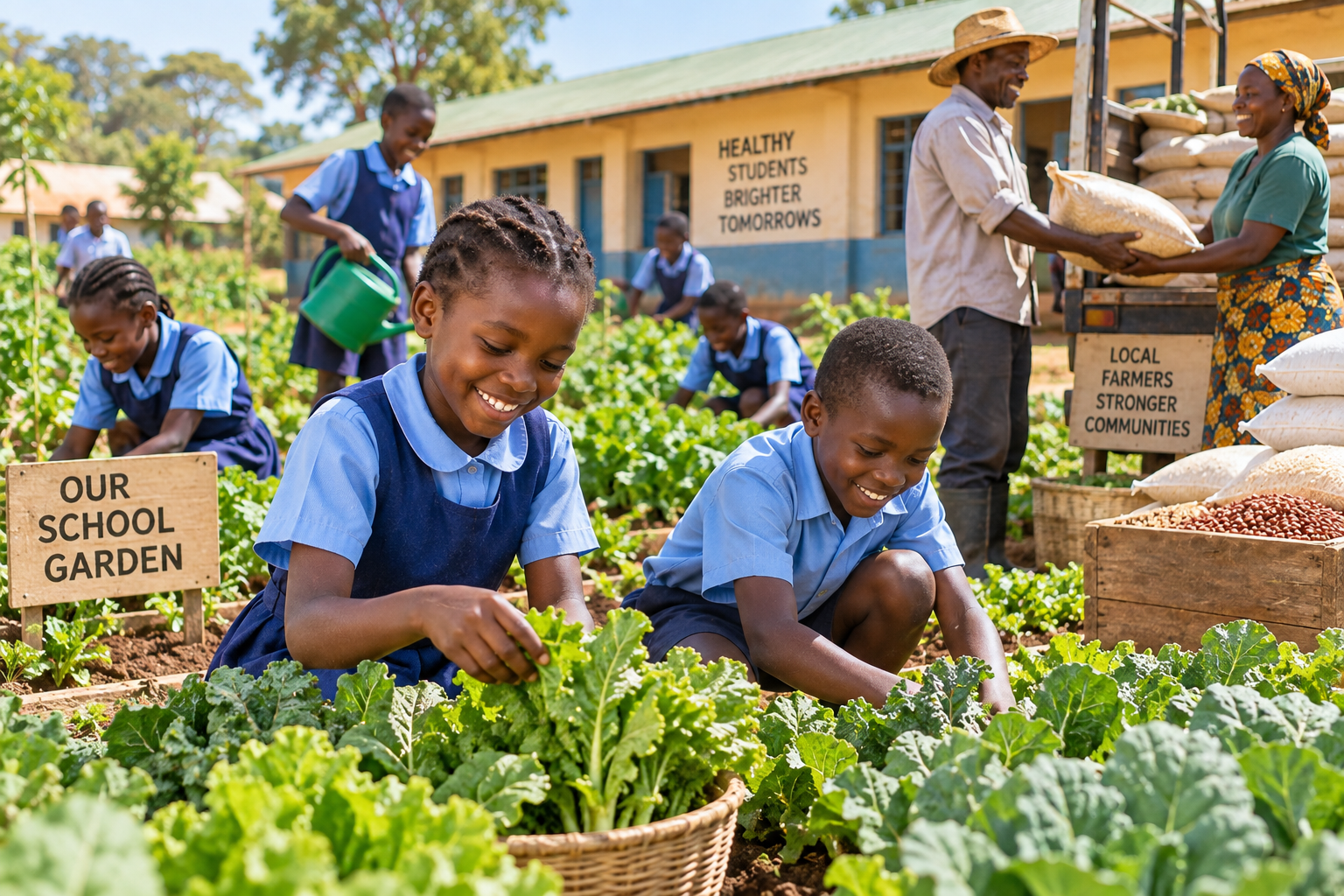
$100 plants and fences a school plot
How this one works
What a garden does
A fenced half-acre on school land, planted with amaranth, kale, tomatoes, onions and beans, tended by pupils during an agriculture period that's already on the national curriculum. It supplies the greens for the lunch pot and takes about 11% off the cost of a plate at schools that have one.
Buying the rest locally
Grain and produce we can't grow is bought from smallholders in the same district wherever supply allows — 76% of it last year, up from 51% in 2024. Shorter supply chains survive a bad road, and the money stays in the economy around the school instead of leaving it.
Not a self-sufficiency story
We want to be careful here, because this is the part charities routinely oversell. A school garden does not make a feeding program self-funding and never will. It trims the cost, teaches something useful, and gives the kitchen greens that would otherwise be the first thing cut when prices rise.
Water is the constraint
Gardens only work where there's water within reach in the dry season. In districts where there isn't, we don't plant one and we don't pretend we could. We fund the meals and buy the greens instead.
Fund this program
Pick an amount.
You can restrict a gift to school gardens on the next page, or leave it unrestricted so it goes wherever the shortfall is biggest that month. Unrestricted is, honestly, more useful — it's what lets us cover a maize price spike without stopping a kitchen.
Other programs: Daily school meals · Take-home rations · Malnutrition treatment
Pick an amount. See exactly what it buys.
Every gift is receipted, pooled monthly, and reported back to you with real numbers.