
Daily school meals
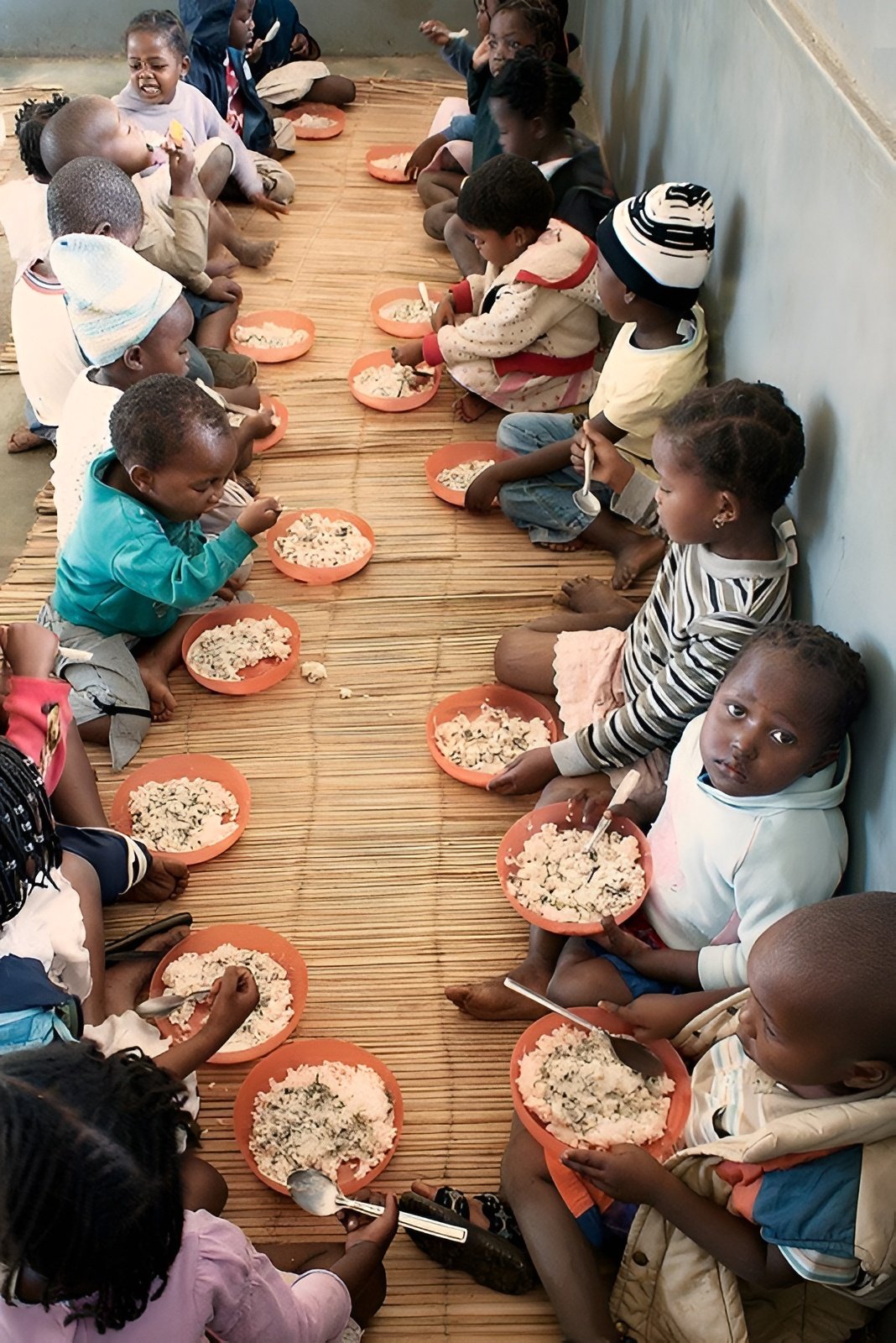
One hot plate, every school day, cooked on site by cooks from the same village.
How it works
Ghana · Uganda · Kenya · Tanzania · Malawi
Not a dollar. Not five. Twenty-five cents puts maize, beans and greens in front of a kid who came to school hungry.
91¢ of every dollar buys food · Receipt emailed instantly · One-time gift, no subscription
See last year's numbers →meals served last school year
kids fed every single school day
cost of the food on one plate
of your dollar goes to food and program
The problem, plainly
That's the part most people miss. Hunger doesn't show up as a child collapsing in a classroom. It shows up as a child who drifts, who can't hold a sentence in their head, who does fine in the morning and badly after lunch — because there was no lunch. Teachers write it down as behavior. It's calories.

Most of the kids we feed walked to school on an empty stomach and will walk home to a house where dinner is uncertain. Showing up is the part they already did.

One plate of maize, beans and greens, cooked on site, costs about a quarter. There's no technology to invent and no breakthrough to wait for.

When a school starts serving lunch, attendance in our districts climbs 11 to 19 points within two terms. It's the most reliable effect we've ever measured.
Four programs
We're not a general-purpose charity that also happens to feed kids. Feeding kids is the entire organization, and these are the four ways we do it.
One hot plate, every school day, cooked on site by cooks from the same village.
How it worksSchool closes for the holidays; hunger doesn't. Families get grain to bridge the gap.
How it worksFor kids already too thin, therapeutic food and weekly weigh-ins until they recover.
How it worksGreens grown on school land, and grain bought from farmers in the same district.
How it worksWhere your money goes
Most people give and then hear nothing. We built the opposite: a short, dull, checkable chain from your card to a lunch tray, with a receipt at every link.
Charged once, or on the same date each month. Receipt in your inbox within a minute.
Gifts sit in a restricted account and are released as grants on the first of the month.
Eleven organizations, all registered where they work, all audited before their first grant.
Kitchen logs, grain receipts and headcounts reviewed every quarter by our country leads.
A quarterly email: meals served, what they cost, and anything that went wrong.
One kid
By ten in the morning I could not hear the teacher properly. Now we eat at one, and the afternoon is fine.Joseph, 11 — Gulu, Uganda
His teacher had him marked down as inattentive for two years. He was hungry.
Stretch it further

Thousands of American companies match employee donations dollar for dollar, and most of that money is never claimed. It takes about five minutes.
Check matching
Add the processing fee at checkout and the whole of your gift buys food instead of paying the card network.
Donate
A 5K, a bake sale, or a birthday where you ask for donations instead of presents. We send a kit with everything you need.
Start a fundraiserReceipted instantly, and reported back to you with real numbers.