
children treated last year
completed treatment and recovered
typical course length
full cost of one recovery
$50 treats one child through to recovery
How this one works
Finding them
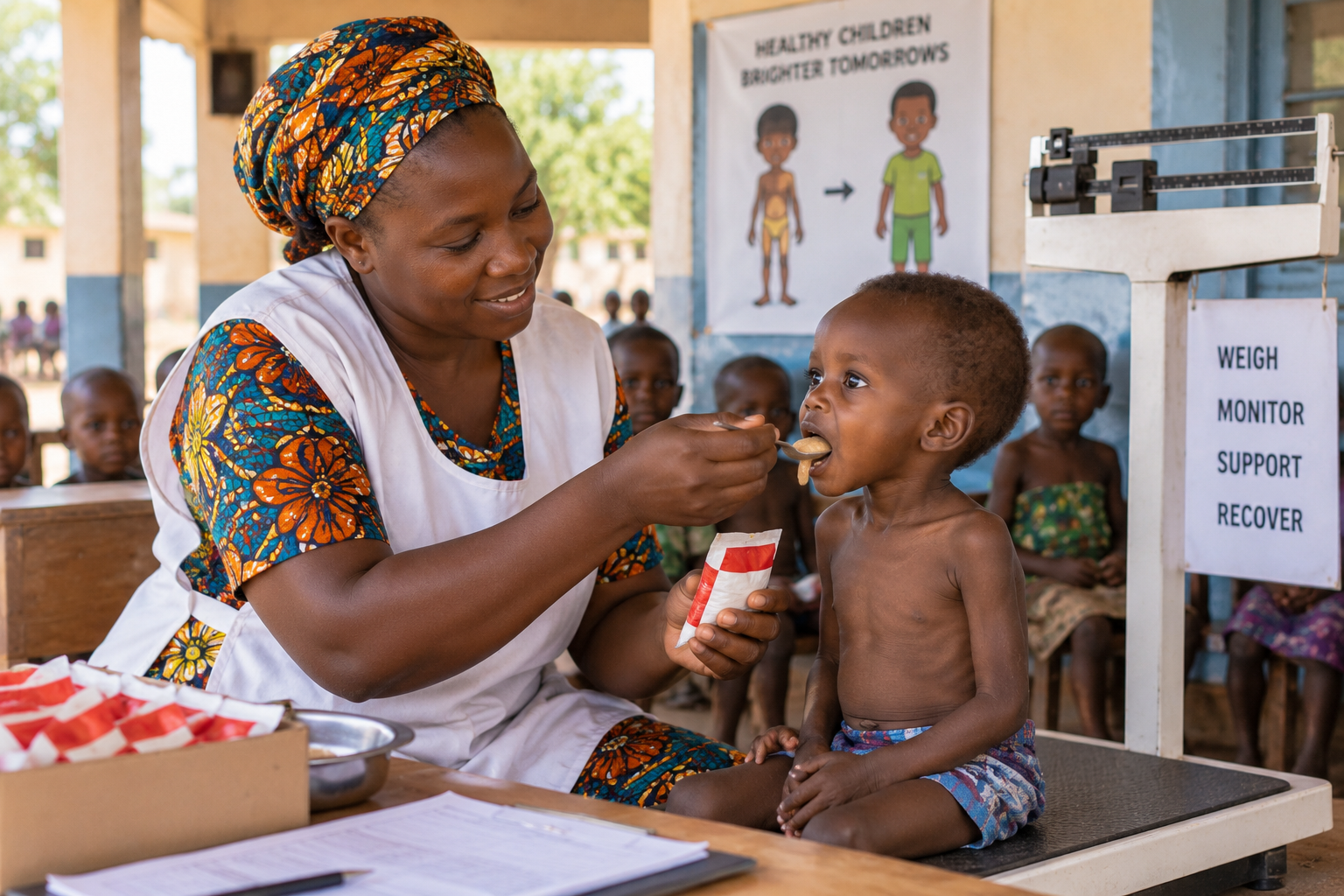
Every child in a partner school is measured once a term: height, weight, and mid-upper-arm circumference, which is the fastest reliable screen there is. A red reading goes into treatment the same week. We find most cases in the 4-to-7 age group, and a good number in siblings too young for school who come along with their brother.
The treatment
Ready-to-use therapeutic food — a fortified peanut paste that needs no water, no cooking and no refrigeration, which is exactly why it works in a village with none of those. A course runs six to eight weeks with weekly weigh-ins, delivered through the district health office rather than around it.
Referral, not heroics
Severe cases with complications go to a district hospital, and we pay the transport, which is usually the actual barrier. We follow every referral to a recorded outcome rather than handing the child over and marking it done.
Recovery rates
89% of children who start a course complete it and reach a healthy weight-for-height. Of the remainder, most defaulted because the family moved. We report defaulters as failures rather than removing them from the denominator, which is a choice that makes our number look worse and be truer.
Fund this program
Pick an amount.
You can restrict a gift to malnutrition treatment on the next page, or leave it unrestricted so it goes wherever the shortfall is biggest that month. Unrestricted is, honestly, more useful — it's what lets us cover a maize price spike without stopping a kitchen.
Other programs: Daily school meals · Take-home rations · School gardens
Pick an amount. See exactly what it buys.
Every gift is receipted, pooled monthly, and reported back to you with real numbers.